Photos by M. Barrett, M. Nowak, and XXXXX
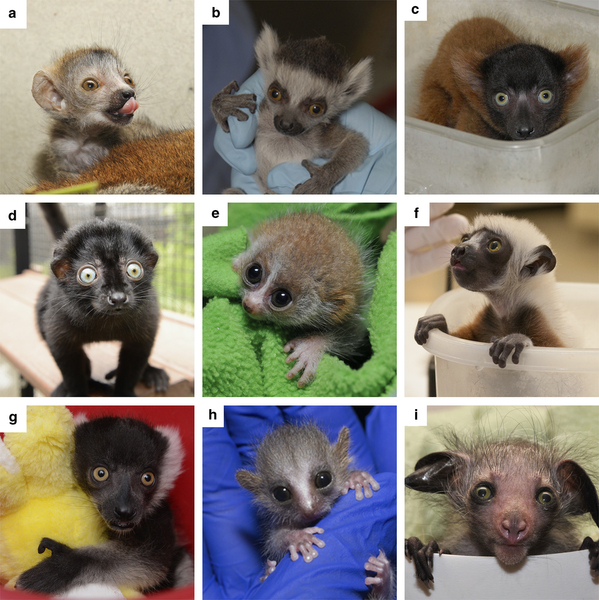
Madagascar has long been recognized as an island of unique floral and faunal diversity. Its status as one of the world's top 12 "megadiversity" countries is without question due to the remarkable levels of species endemism displayed by the resident organisms. For example, 95% of the reptile species, 99% of amphibian species, and 100% of primate species are unique. More importantly, Madagascar shows elevated levels of endemism at higher taxonomic levels, such as genera and families, than any landmass other than Australia, which is 13 times larger.
The complex relationship between geological history and geographic placement have conspired in Madagascar's case to create its unique assemblage of organisms. At present, it lies approximately 300 miles to the east of Africa at the narrowest point of the Mozambique Channel and is otherwise completely isolated from other significant landmasses. Moreover, there has been a deep oceanic rift separating Madagascar from Africa for at least the past 150 million years for which changing sea levels would have had little effect. This ancient separation significantly predates the first appearance of any modern mammalian lineages in the fossil record. Thus, the wonder is not that certain lineages are poorly represented in Madagascar, it is that they reside there at all.
In addition to the obvious conservation and biodiversity concerns incumbent to its biogeographic patterns, Madagascar arouses interest among evolutionary biologists who wish to understand the extent to which geographic constraints influence organismal evolution.
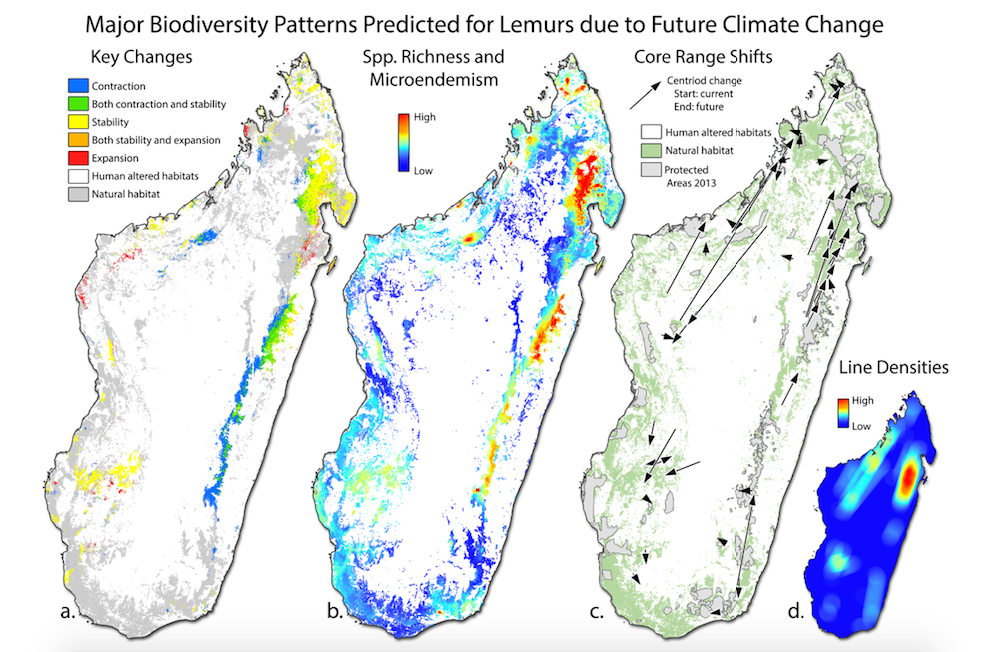
One of the unifying themes in the Yoder lab research effort is to employ comparative molecular evolutionary data from a number of taxonomic groups in order to reconstruct Madagascar's biogeographic history. We areinterested in questions of deep time (e.g., how and when did terrestrial vertebrates colonize Madagascar?), the recent geological past (e.g., has Quaternary climate change affected patterns of vertebrate speciation?), and the present (e.g., how is the accelerating process of deforestation effecting patterns of genetic diversity in forest dependent vertebrates?).