Kathleen Donohue
Professor
Office: Biological Sciences 226
Duke faculty bio
email: k.donohue@duke.edu
Mariano Alvarez
Postdoctoral Research Associate
email: mariano.alvarez@duke.edu
webpage: here
I’m interested in understanding the genetic basis of phenotypic plasticity and adaptation, and I’m exploring these processes by integrating genomics, transcriptomics, and epigenomics to identify the loci and networks that underlie environmentally-labile phenotypes.
Brandie Quarles
Ph.D. Candidate, Biology
email: brandie.quarles@duke.edu
website: here
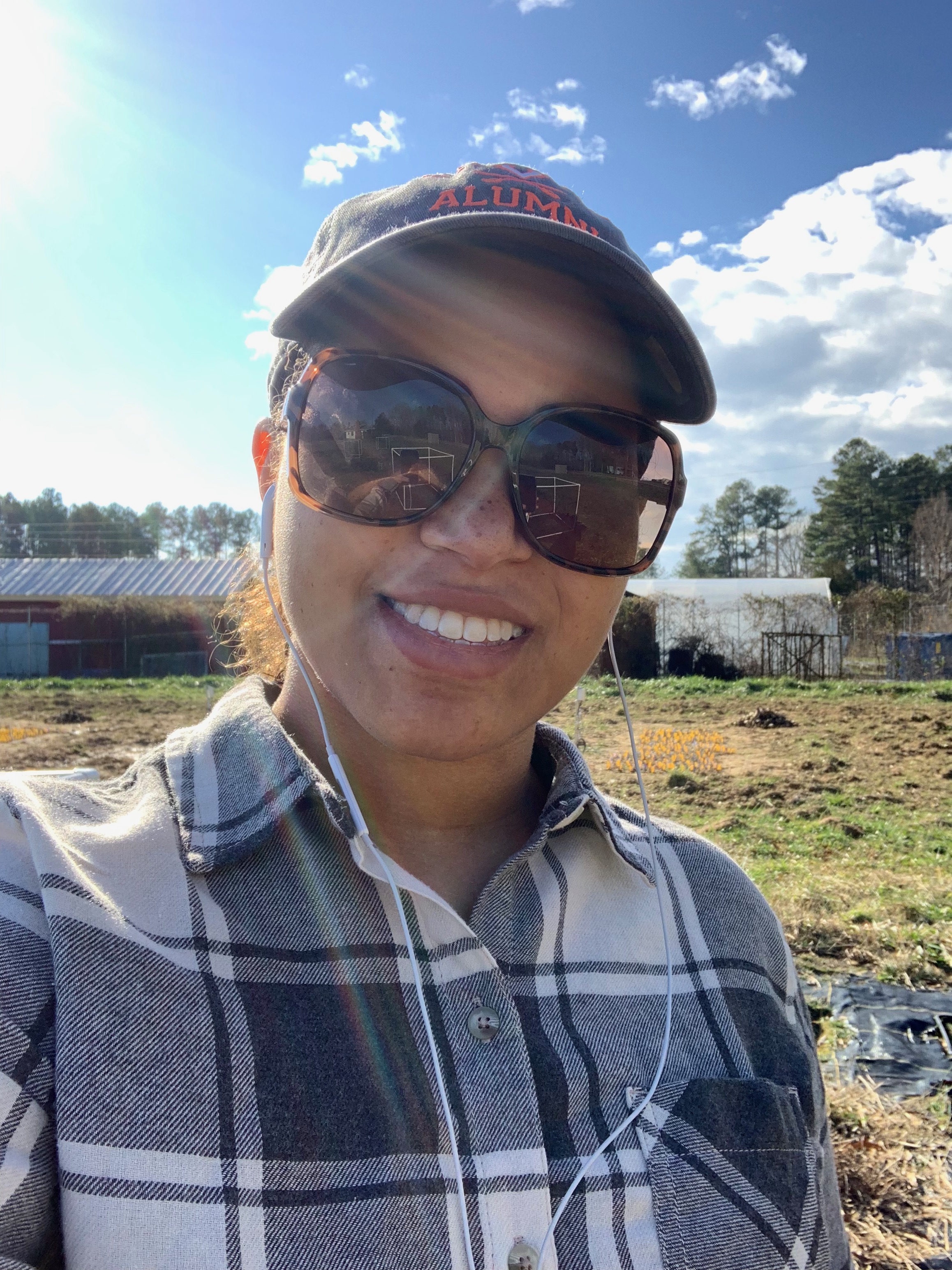
I am broadly interested in how stressful and/or variable environments influence plant physiology, phenology, survival, and reproduction. As habitat fragmentation and changing climatic conditions pose mounting threats to plant populations, it is important to learn more about the traits that may ensure survival of individual plants and the population-level effects of those traits. For my dissertation, I plan to investigate how spatial and temporal dispersal influence plant population demography and adaptation. I will use a combination of large-scale field experiments, greenhouse common gardens, phytotron experiments, genetics, and mathematical modeling. Prior to coming to Duke, I did some work with self-incompatibility, polyploidy, plant aging, and demography.
Emily Thayer
Associate in Research, Biology
email: emily.thayer@duke.edu
I am broadly interested in community ecology and species interactions. Specifically, interactions between native and non-native species which are important to understand as climate change continues to shift habitats. Currently, I work on a project investigating the genetic basis of phenotypic plasticity and adaptation in Arabidopsis thaliana.
UNDERGRADUATES
Erin Greig:
Erin is a Global Health and Biology major, and she is broadly interested in relationships between genetics and the environment. She is working with Brandie Quarles in the phytotron, greenhouse and in the laboratory on tasks including plant care, leaf tissue collection, DNA quality control and the collection of phenotypic data for A. thaliana dispersal experiments.
Coleman Davis:
Colem an researches how seed dispersal and dormancy influence plant adaptation and demography. He is interested in the interaction between genes and environments. He has been certified as a state EMT responder, and is on the Duke all-volunteer EMS.
Nicholas (Nick) Doak:
 This semester I will be working alongside Brandie to investigate the effects of temporal dispersal (i.e. delayed germination) on local adaptation of A. thaliana populations to the Durham, NC environment. My role centers around computational analysis through SAS, R, and Python of recorded environmental and germination data. Going forward, I am extremely excited to apply my experience here to graduate school and eventually conduct biochemical research in drug development.
Jonathan (Yoni) Eini:
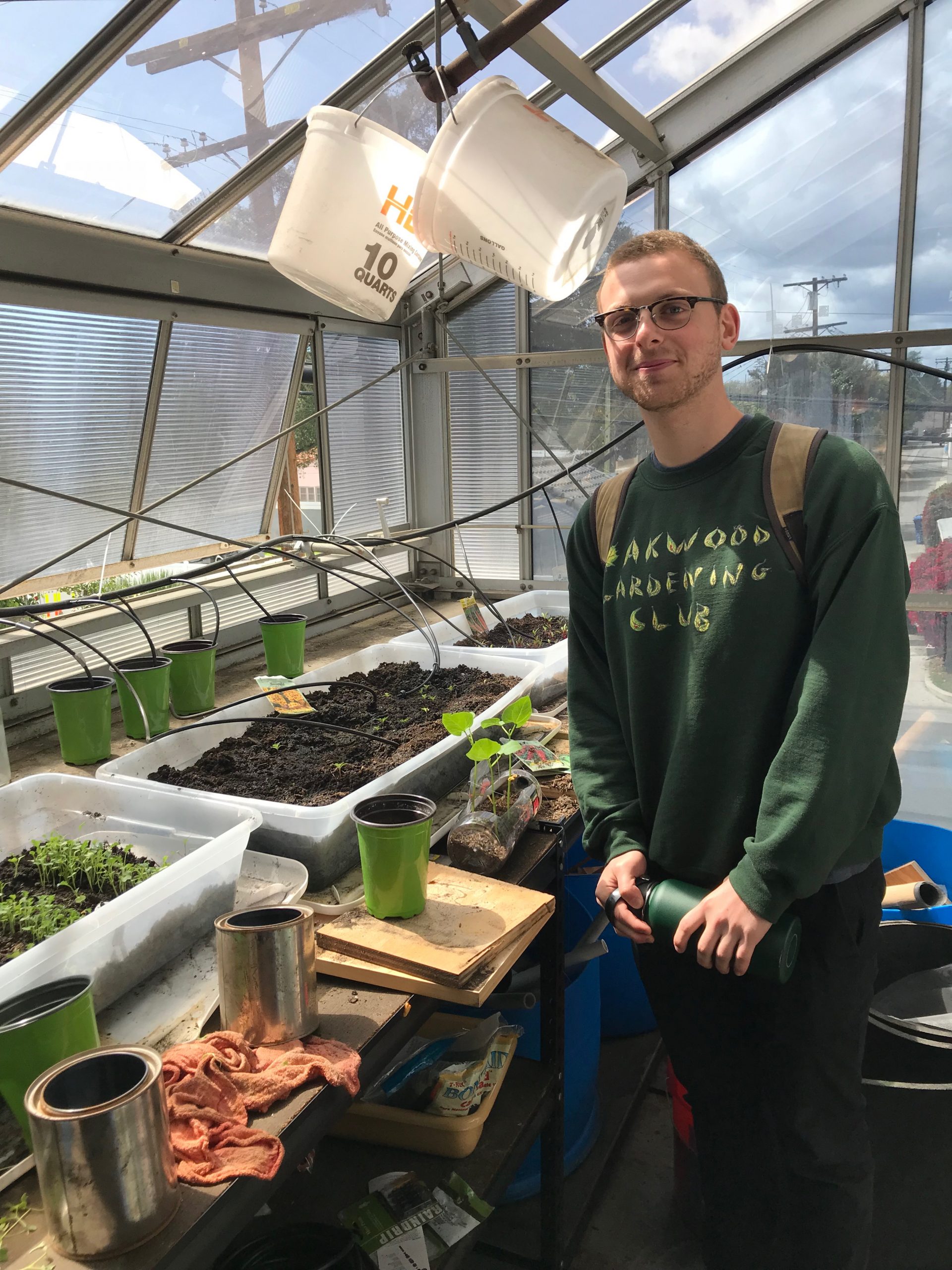 I am generally interested in how environmental variation alters plant reproduction as well as the role of epigenetics as a mechanism for transgenerational plasticity. At the Donohue lab, I have worked in conjunction with Brandie Quarles to better understand the ways in which dispersal impacts the adaptation and reproductive traits of plant populations, and have done so through the use of the Duke phytotron, green-house spaces, and larger field experiments. Before Duke, my work focused on grassroots community gardening projects, and outside of this lab, my research focuses on social relationships and belonging through my work with the psychology department.
Caroline Fiore:
 Caroline is involved in a field experiment that tests how seed dormancy influences plant demography and adaptation. She has interests in genomics, the genetic basis of adaptive traits, and biological diversity. Besides Biology, Caroline also enjoys studying Art History, Anthropology and Literature. Her interests in Ecology stem from her involvement with wetland conservation efforts in her hometown of New Orleans, Louisiana.
Xavier Heidelberg:
Xavier is conducting an experiment to test whether good versus poor dispersing plants differ in phenotypes, size, and fitness. He is also testing how they respond phenotypically to post-dispersal density. Potential differences between plants that disperse well and those that don’t could influence rates of range expansion and adaptation.
Jacob Carnes:
Jacob is working with Brandie to study how spatial seed dispersal and seed dormancy influence plant demography, genetics, and adaptive outcomes.
Jonathan Pertile:
 I’m a volunteer field assistant for Brandie Quarles’ project. I’m broadly interested in genetics and how organisms adapt to their environments. Currently, we are conducting an experiment that measures demography of populations that differ in seed dormancy.
Devan Wainright:
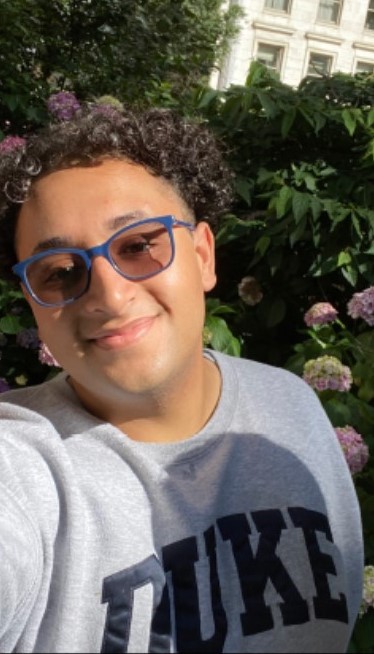 Hello! My name is Devan Wainright, and I am a junior studying Biology and Public Policy here at Duke. I am incredibly interested in the intersection of ecology and organismal interactions with the changing environment. I currently serve as an undergraduate laboratory research assistant in the Donohue Lab. I work in the field site caring for the Arabidopsis germinants and conducting weekly census counts, and also work with Brandie Quarles in the lab to measure seed weighs, prepare experiments and most importantly – learn the foundational skills of biological research. I am also interested in melding science and public policy, and I hope to take the concepts I have learned in this lab and apply them in the public sector. Thank you for reading!
Lab alumni
Rafael Rubio de Casas: Postdoctoral Research Associate Grenada, Spain
Lauren Ruane: Associate Professor Christopher Newport University
Logan K. Blair: Graduate Student, University of California at Davis
Emily Woska
Mae Lewis
Stella Arndorfer
Hannah Neville
Paul Griggs
